
Getting the Whole Thing In
The paperclip sits at the edge of the message box, unused by nearly everybody for more than one file at a time.
Half of what gets called a reading problem is a feeding problem. Somebody pastes three paragraphs of a long report, asks about the whole thing, gets a thin answer and decides the tool is not serious.
Three paragraphs out of an eighty page report is a keyhole, and nothing on the other side of it can answer for what it never saw.
So the stack goes in whole first. Then the more interesting half starts, because the obvious thing to ask for is the worst one.
Through the dock, not the mail slot
Attaching is the default. The paperclip takes whole documents as they are, and dragging them onto the conversation does the same.
Pasting is for anything already on your screen as text, and a long paste is treated the way a file is.
Documents go in as they are: PDF, Word, plain text, rich text, web pages and e-books
Spreadsheets and comma separated files go in as files, and the numbers inside stay computable
A PDF under roughly a hundred pages is read with its charts and tables, not only its words
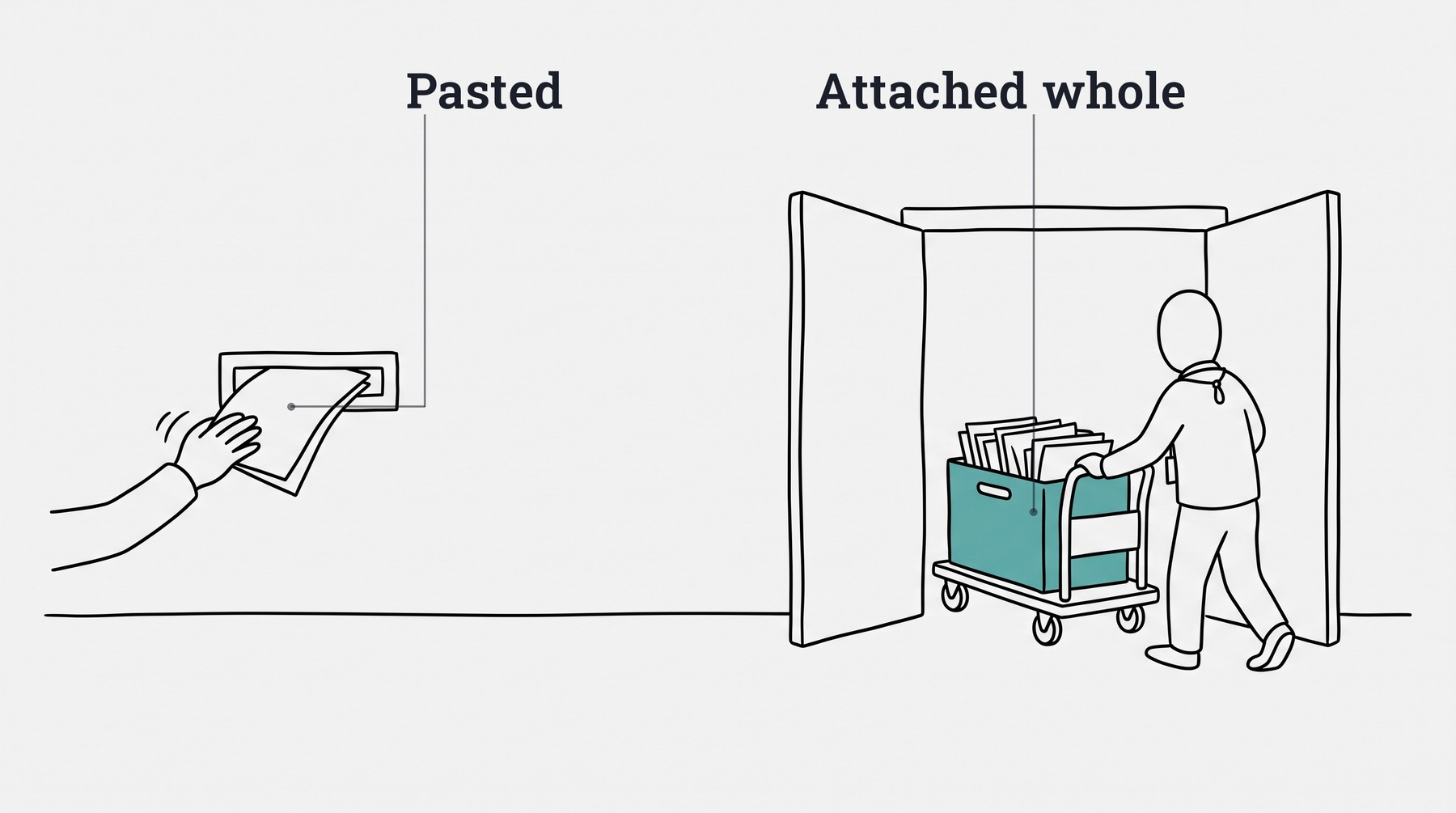
One conversation takes a set of files, so the stack arrives together and gets questioned together.
The weakest question you can ask
Almost every first instinct here is the same word, and the word is summarise.
A summary is the document made smaller with the author's own emphasis left in place. They decided what mattered on the day they wrote it. A summary shrinks that decision faithfully and adds nothing.
Yours appears nowhere in it. You get a tidy paragraph on highlights while the clause governing your next fortnight sleeps on page sixty-one.
A briefing is the same document reshaped around your situation, which sounds like a small distinction and changes the whole answer.
What in here affects the decision I have to make?
What would a careful professional flag before I sign?
What is missing that a document like this should contain?
Where does this conflict with what I already know?
What does this document say, but shorter?
What did the authors think was important?
Give me the gist, and whose gist is that?
The same request for every document, every time
The two columns are two different questions rather than two levels of effort.
The shape of a real ask
A briefing request has five pieces and takes about forty seconds to write. Paste this into Claude with the files attached, filling in the brackets:
The last piece is the one people drop, and absences are where the risk lives.
Where it goes quiet on you
The silent failure is a scan. A PDF that is really photographs of pages carries no text layer and comes through as fog, and a very long file is read for words with the charts left aside.
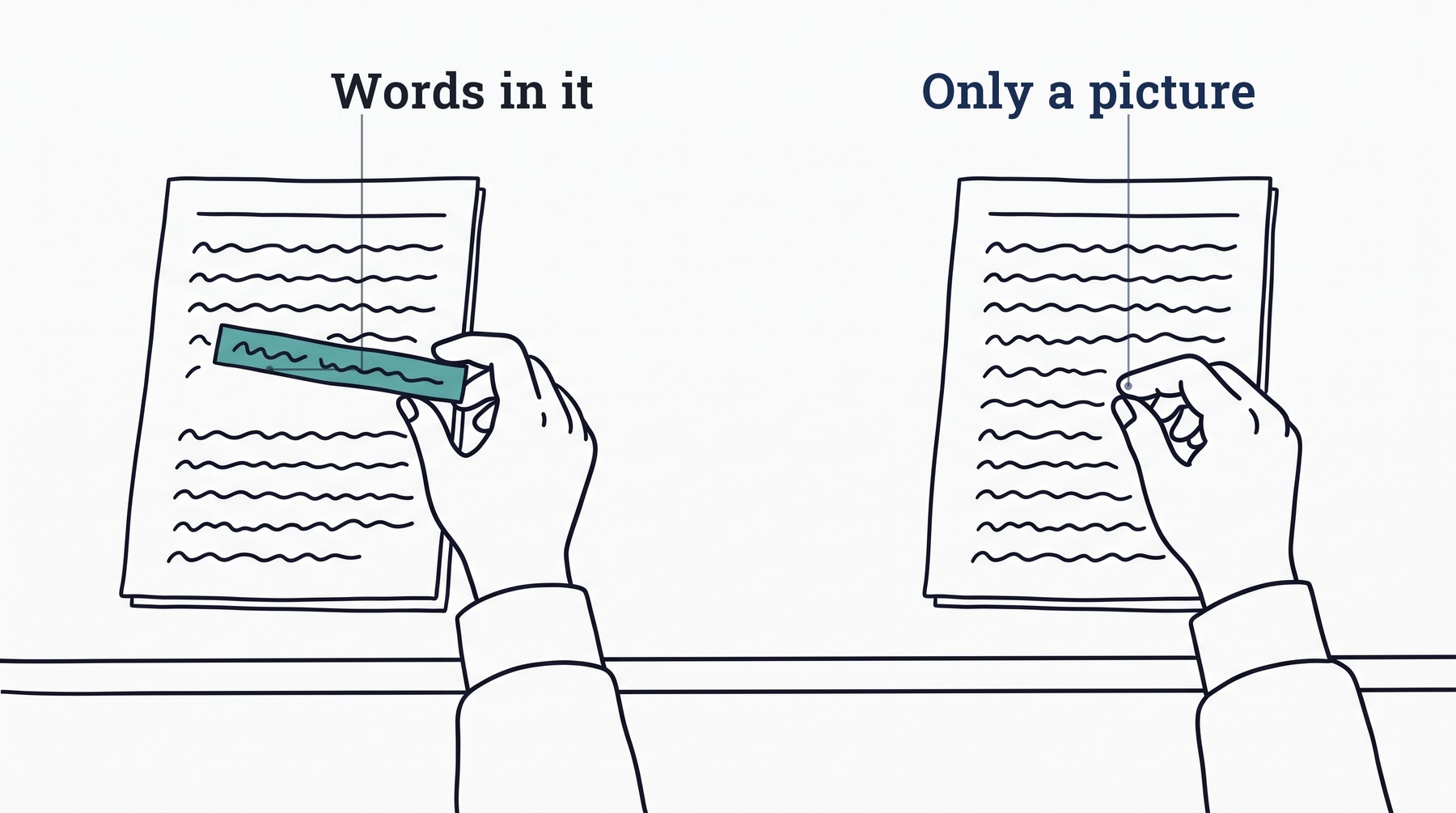
The tell is an answer that feels oddly vague about a document you know is specific. Ask it to quote that file's first paragraph back to you, and thirty seconds settles it.
Everything after this lesson assumes the whole stack is in the room and that you have checked it arrived.
Where these facts come from
The file counts and the roughly hundred page threshold for a full read with charts are the publisher's own published figures, read on the day this was written, and theirs to change. The split the panel performs is arithmetic on a page count you supply. Nothing here is a measured claim about The Training Group or any document of theirs.