A stack of paper you did not write is sitting somewhere you can see it, and you have just watched the sixty year old reason it is still closed.
Somewhere in your working week there is a pile you are choosing to hope about, and hoping is a decision you never made out loud.
Making pages stopped being expensive about sixty years ago. Reading them stayed exactly as expensive as it always was.
So the habit everyone built was skimming, and this lesson is about what replaces it.
The bill nobody writes down
A copier arrived in offices at the end of the nineteen fifties and made a page cost almost nothing to produce. Within a decade businesses were making billions of them a year.
A page still took the same two minutes to read. That gap is the whole reason an inherited folder feels heavy: the pile grew at one speed and your attention stayed at another.
Everything that filled the gap was a way of not reading. The executive summary. The skim. The signature on page sixty-one of something nobody opened past page four.
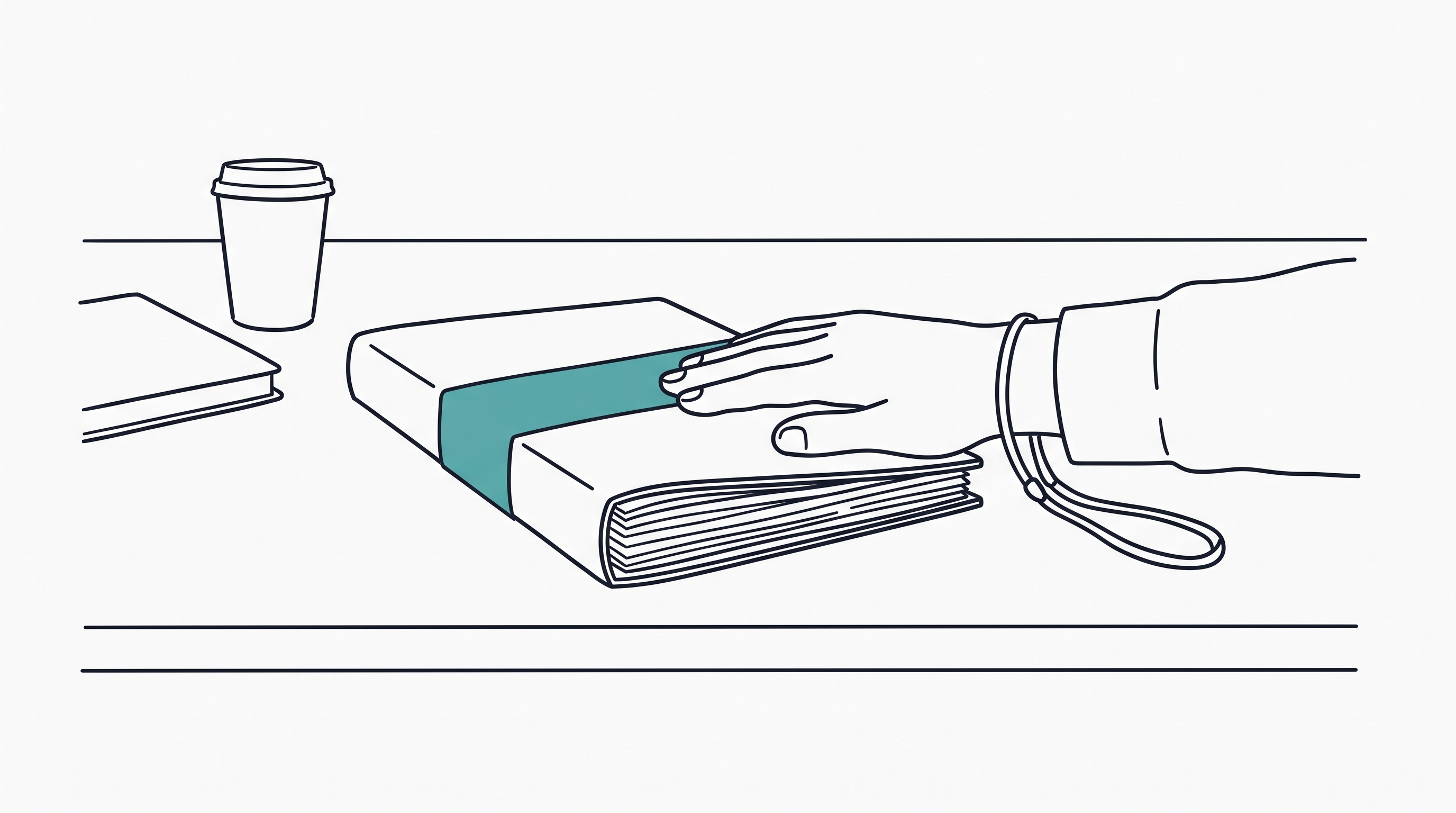
Somebody else wrote it, and the answer for it is yours.
What the pile actually costs
Claude holds about five hundred pages, and several times that on its newest models in one conversation and works across all of it at the same level of attention, which is the part that changed.
"How long would it take me to read every page of this properly?"
Nobody asks, because the answer is unpleasant and nothing used to follow from it. Now something does.
The pages you would have to open to answer honestly
The ones you would skim and quietly count as read
The ones you would never open and would still be answerable for
Put your own stack into that sum before you read on.
That number is the reason the stack is closed, and it is the only number in this course that shrinks.
The habit that makes it safe
An assistant reading your contract will sometimes be confidently wrong, and a wrong answer arrives dressed exactly like a right one, in the same fluent tone and the same tidy shape. Append the sentence below to any document question you put to Claude, and paste it as it stands:
What a quoted line buys you
It turns an answer into a citation. Checking a quoted line takes seconds, and re-reading a chapter takes an evening.
Claude says the agreement renews itself every year. What do you ask before acting on it?
For the exact passage, word for word, and where it appears.
Why is a wrong answer about a document hard to spot on its own?
It looks identical to a right one. Only the quoted source line separates them.
Where it cannot produce the line, you have learned something more useful than the answer you asked for.
One limit keeps the habit honest. On anything expensive to be wrong about, open the quoted line in the document itself, because a citation nobody opens is a claim in costume.
The quoted line is the whole defence, and it costs one sentence at the end of every question.
Where these facts come from
The copier history is the ordinary business record and is used here for the producing against reading gap rather than as a figure. How much one conversation holds is the publisher's own documentation and it moves, so it is written as a range. The reading time is yours: the panel multiplies a page count you set by a round two minutes. Nothing here is a measured claim about The Training Group or anybody's stack.